VPN
A clear, practical guide to what a VPN is, how it works, and how to choose and use one.
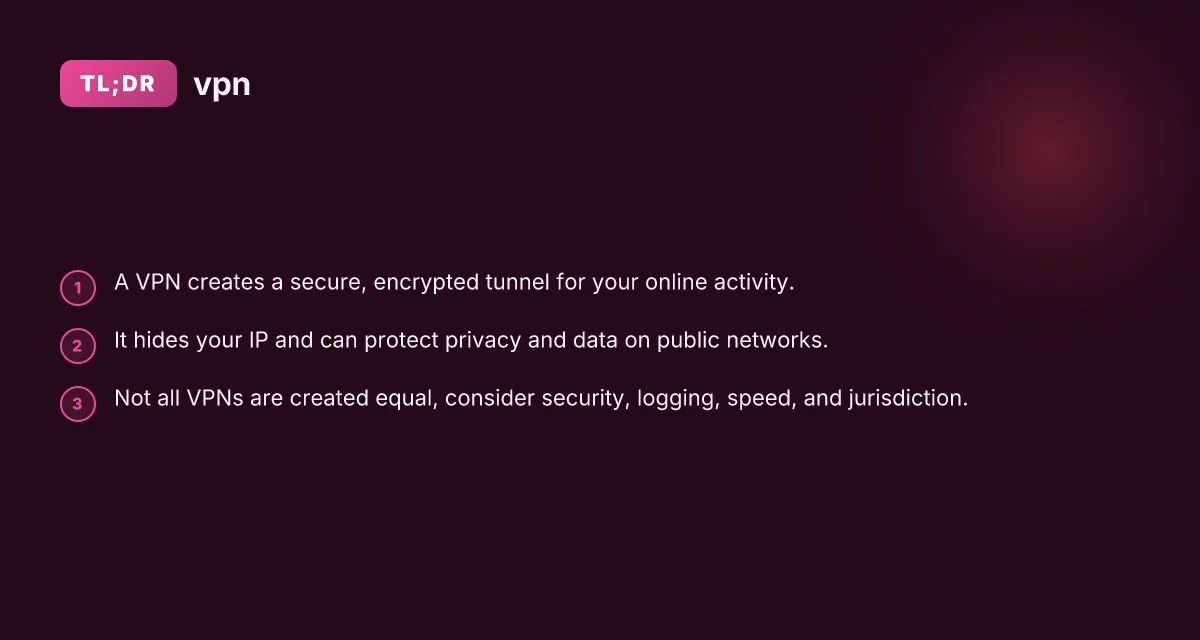
VPNs are a practical tool for online privacy, security, and access. In simple terms, a VPN (virtual private network) routes your internet traffic through a server run by the VPN provider. This creates an encrypted tunnel between your device and the VPN server, shielding your data from prying eyes on public Wi‑Fi and masking your real IP address. Whether you’re concerned about privacy, streaming from other regions, or securely working remotely, a VPN can be a useful addition to your digital toolbox.
How a VPN works
The basic flow
- Your device connects to the VPN server.
- All traffic is encrypted and transmitted to the server.
- The server forwards traffic to its destination on the internet.
- Replies go back through the VPN server to you, remaining encrypted.
Why encryption matters
- Encryption protects data from eavesdroppers on public networks.
- It helps guard passwords, emails, and sensitive work documents.
- Strong encryption reduces the risk of man‑in‑the‑middle attacks.
Common protocols
- OpenVPN
- WireGuard
- IKEv2/IPsec
- L2TP/IPsec Different protocols offer trade‑offs between speed, security, and compatibility. Some providers default to one protocol but let you switch.
Use cases for a VPN
Privacy on public networks
Public Wi‑Fi can be risky. A VPN adds a layer of protection so that others on the same network have a harder time snooping on your traffic.
Bypassing regional restrictions
Some services show different content in different regions. A VPN can connect you to a server in a desired location to access region‑locked content.
Remote work and secure access
Companies often require a VPN to securely access internal systems. A VPN helps protect corporate data when employees work from home or travel.
Safe torrenting and sensitive browsing
For some users, a VPN can provide privacy when engaging in torrenting or accessing sensitive sites. Note that legality and terms of service still apply. Grasshopper review stay connected at all times
Choosing a VPN
Key factors to evaluate
- Security and privacy features: strong encryption, no‑log policies, and robust authentication.
- Jurisdiction: where the provider is based and how it influences data retention and government access.
- Speed and performance: server network size, bandwidth limits, and protocol efficiency.
- Device compatibility: apps for desktop, mobile, routers, and browser extensions.
- Customer support and transparency: clear policies, accessible support, and independent audits.
- Price and value: features offered at each price point, including free trials or money‑back guarantees.
Logging, policies, and independence
- No‑log claims should be backed by independent audits when possible.
- Some providers keep metadata or connection logs. Understand what is stored and for how long.
- Transparency reports and third‑party audits add credibility.
Free vs paid VPNs
- Free VPNs often come with trade‑offs like data caps, slower speeds, or data‑sharing commitments.
- Paid VPNs typically offer stronger security, better privacy, more features, and faster speeds.
A quick feature checklist
Security features
- Strong encryption (e.g., AES‑256)
- Secure VPN protocol options (OpenVPN, WireGuard, etc.)
- Kill switch to block traffic if the VPN drops
- DNS leak protection to prevent your real DNS from leaking
Privacy and policy features
- Clear no‑logs policy
- Independent audits or transparency reports
- Minimal data collection beyond what’s necessary for service
Performance features
- Large server network across locations
- Optimized routing and load balancing
- Simultaneous connections per account
Usability features
- Easy setup across devices
- Auto‑connect and stealth mode options
- Split tunneling to choose what goes through the VPN
VPN comparison at a glance
| Factor | VPN A (example) | VPN B (example) | VPN C (example) |
|---|---|---|---|
| Encryption | AES‑256 | AES‑256 | ChaCha20‑Poly1305 |
| Protocols | OpenVPN, WireGuard | WireGuard, IKEv2 | OpenVPN |
| No‑log policy | Yes, audited | Yes, not audited | Yes, unclear |
| Jurisdiction | US | Panama | Switzerland |
| Server locations | 60+ cities | 30+ countries | 90+ countries |
| Simultaneous devices | 6 | 5 | 10 |
| Price (monthly) | $12.99 | $9.99 | $11.99 |
| Kill switch | Yes | Yes | Yes |
Note: The table uses illustrative examples. When choosing a provider, verify current specs and audits.
Real‑world considerations
Legality and terms of service
- VPN use is legal in many places, but some jurisdictions have restrictions.
- Always respect the terms of service of the services you use. A VPN does not grant immunity from terms violations.
Security hygiene
- Keep devices updated to minimize vulnerabilities.
- Use strong, unique passwords and enable multi‑factor authentication where possible.
- Be cautious of phishing and social engineering, even when connected to a VPN.
Performance expectations
- A VPN adds overhead. You may notice slower speeds compared with your baseline connection.
- Server distance matters: closer servers usually yield better speeds and lower latency.
How to set up and use a VPN
Step-by-step quick setup
- Choose a reputable VPN provider based on the criteria above.
- Create an account and download the app for your device.
- Install and sign in. Select a server location and a preferred protocol if available.
- Enable features like kill switch and DNS leak protection.
- Connect and test your IP address to confirm you’re routing traffic through the VPN.
On different devices
- Desktop and mobile apps cover Windows, macOS, iOS, and Android.
- Some providers offer browser extensions for quick secure browsing, though extensions are not a complete substitute for a full VPN client.
- Routers can be configured to run a VPN for all home devices, which can be convenient but may require more setup effort.
Common misconceptions
- VPNs hide all online activity from everyone: Not always. Your ISP may still see that you’re using a VPN. The content remains encrypted, but metadata can still be visible.
- A VPN makes you completely anonymous: It improves privacy, but it doesn’t guarantee anonymity. Other tracks like cookies, device fingerprinting, or login information may still identify you.
- Free VPNs are as trustworthy as paid ones: Free services often rely on alternative revenue models and may compromise privacy or show ads.
Final recommendation
If you’re new to VPNs, start with a reputable paid provider that offers a clear no‑logs policy, independent audits, a robust encryption suite, and a user‑friendly experience. Prioritize features like a kill switch, DNS leak protection, and a broad server network for flexibility. For basic privacy on public Wi‑Fi and occasional streaming access, a mid‑range plan with a strong privacy posture is typically enough. If you need to secure a home network, consider configuring a VPN on your router for device‑level protection across all connected equipment.
If you want a tailored pick, tell me your priorities (privacy emphasis, streaming needs, budget, and the devices you use). I can suggest a short list of concrete VPNs that fit your situation.
| VPN | Obfuscation | From / month | Plan | Free plan | Refund | Alipay | UnionPay | Crypto | Website opens in China | Trustpilot | |
|---|---|---|---|---|---|---|---|---|---|---|---|
 ZoogVPN | Turn on manually Shadow | $2.49/mo | 27 months: $59.99 | Yes | 7 days | ✓ | ✓ | ✓ | ✓ | Official site blocked; our special link opens (4.4 s) | 4.2/5 (195 reviews) |
 NordVPN | Turn on manually Obfuscated Servers / NordWhisper | $3.49/mo | 27 months: $94.23 | No | 30 days | ? | ✗ | ✓ | ✓ | ✗ Blocked | 4.2/5 (51,628 reviews) |
 ExpressVPN | ✓ On by default all servers | $3.00/mo | 28 months: $84 | No | 30 days | ✗ | ✗ | ✓ | ✗ | ✗ Blocked | 4.4/5 (29,706 reviews) |
 Surfshark | ✓ On by default Camouflage, with OpenVPN | See site | See site | No | 30 days | ✗ | ✗ | ✗ | ✓ | ✗ Blocked | 4.3/5 (31,823 reviews) |
 Proton VPN | Turn on manually Stealth, free plan too | $2.99/mo | 12 months: $35.88 | Yes | 30 days | ✗ | ✗ | ✗ | ✓ | ✗ Blocked | 2.1/5 (1,040 reviews) |
 Astrill VPN | Turn on manually StealthVPN / OpenWeb | $12.50/mo | 24 months: $300 | No | See site | ✗ | ✗ | ✗ | ✓ | ✗ Blocked | 1.3/5 (110 reviews) |
 Private Internet Access | Turn on manually Shadowsocks, OpenVPN only | $2.03/mo | 40 months: $81.2 | No | 30 days | ✗ | ✗ | ✗ | ✗ | ✗ Blocked | 4.2/5 (11,033 reviews) |
 CyberGhost | Turn on manually selected servers | $2.19/mo | 28 months: $61.32 | No | 45 days | ✗ | ✗ | ✗ | ✓ | ✗ Blocked | 4.0/5 (24,178 reviews) |
 PureVPN | Turn on manually switch to OpenVPN | $1.69/mo | 60 months: $101.55 | No | 31 days | ? | ? | ✗ | ✓ | ✗ Blocked | 4.4/5 (17,994 reviews) |
 AdGuard VPN | ✓ On by default TrustTunnel | $2.99/mo | 24 months: $71.76 | Yes | 30 days | ✓ | ✗ | ✓ | ✓ | Official site blocked; our special link opens (3.7 s) | 4.3/5 (290 reviews) |
 Mullvad | Turn on manually QUIC / Shadowsocks / LWO | $5.61/mo | €5/mo | No | 14 days | ✗ | ✗ | ✗ | ✓ | ✗ Blocked | 3.2/5 (192 reviews) |
 Windscribe | Turn on manually Stealth / WStunnel | $5.75/mo | 12 months: $69 | Yes | See site | ✗ | ✗ | ✗ | ✓ | ✗ Blocked | 4.7/5 (13,355 reviews) |
 StrongVPN | Turn on manually Scramble, OpenVPN TCP | See site | See site | No | 30 days | ✓ | ✗ | ✗ | ✗ | ✗ Blocked | 4.4/5 (2,695 reviews) |
 LightXtreme 闪连 | Not listed | $7.08/mo | 12 months: $84.99 | Yes | 30 days | ✓ | ✓ | ✓ | ✓ | ✓ Yes (3.5 s) | No page |
Prices checked 2026-11-10 on each vendor's pricing page (cheapest long plan, USD). Check the vendor's checkout for the final price.
Obfuscation checked 2026-11-14 on each vendor's site and help center: "on by default" = nothing to set; "turn on manually" = switch protocol or mode in settings; "not listed" = the vendor describes no obfuscation.
Payment methods checked 2026-11-10 on each vendor's payment pages: all 14 take cards and PayPal; ✗ = not listed, ? = the vendor's own pages disagree.
China access: whether the official website opens from mainland China networks (tests the website only, not the VPN connection). Last checked 2026-11-18 01:02 Beijing time.
Trustpilot score and review count checked 2026-11-10.