Disclosures

A comprehensive guide to disclosures, what they are, where they apply, and how to implement them effectively across contexts.
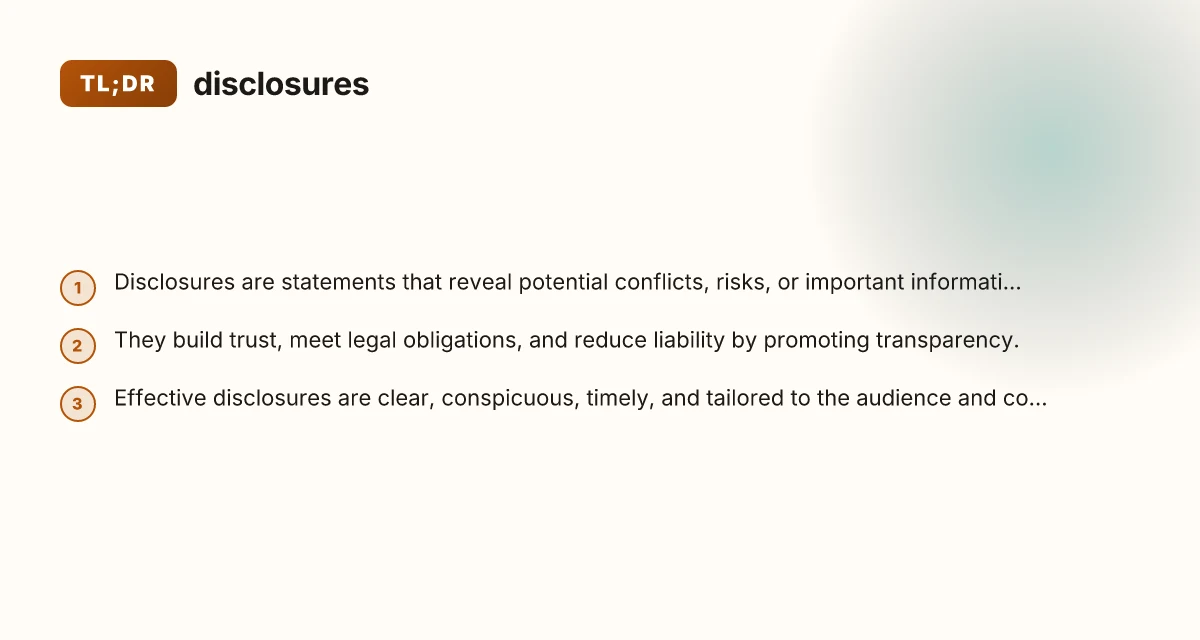
Disclosures are a fundamental element of transparent communication. Whether you’re presenting a business proposal, sharing financial information, or posting content online, disclosures help audiences understand the full context behind what they read or see. This article explains what disclosures are, why they matter, where they’re required, and best practices for crafting them well.

What disclosures are and why they matter
Disclosures are statements that reveal information that could influence a reader’s or user’s understanding or decision. They often address conflicts of interest, potential risks, limitations, or the source of information. Common contexts include:
- Financial reporting: risk factors, material changes, and auditor notes.
- Marketing and advertising: sponsorships, endorsements, and paid promotions.
- Legal and regulatory filings: disclosures of material facts or legal obligations.
- Online content: ownership, authorship, and affiliate relationships.
Why they matter:
- Trust and credibility: Transparent disclosures help audiences trust your claims.
- Risk management: They reduce the chance of misinterpretation and legal exposure.
- Informed decisions: Readers can weigh information with the disclosed context.
- Compliance: Many industries have laws requiring specific disclosures.
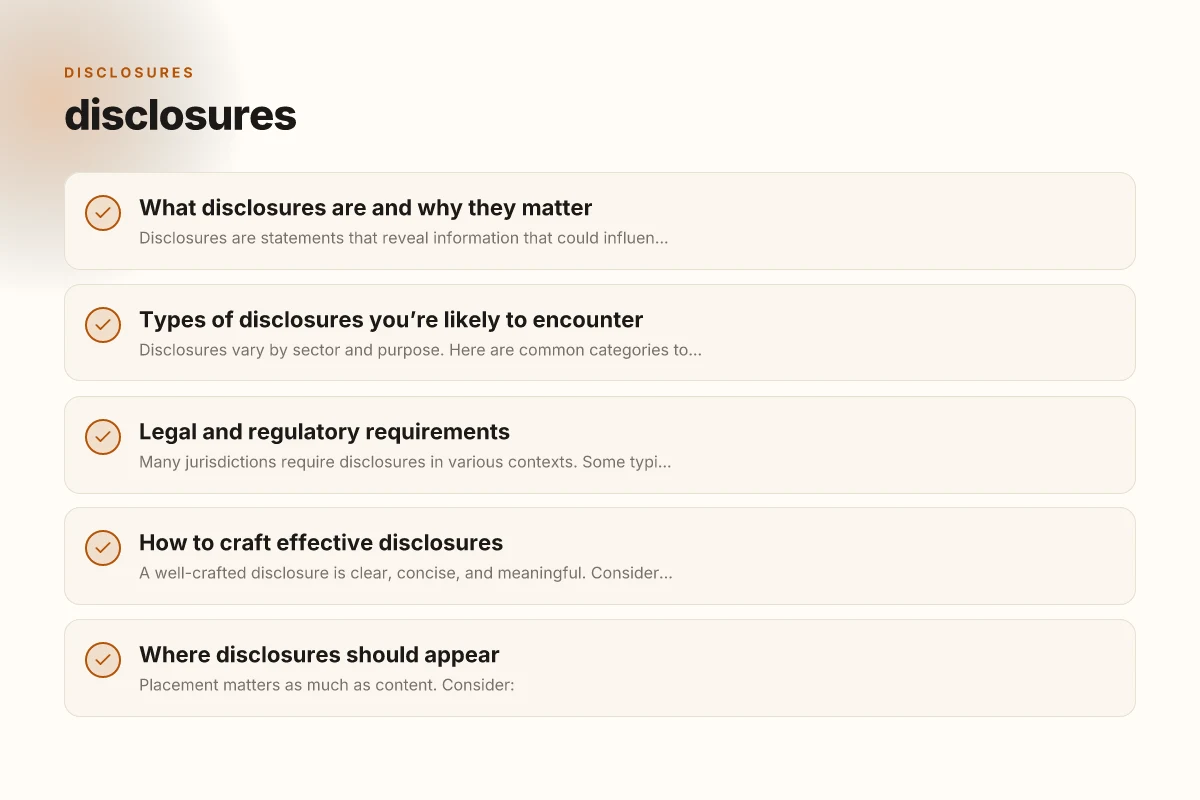
Types of disclosures you’re likely to encounter
Disclosures vary by sector and purpose. Here are common categories to recognize:
- Conflicts of interest: Revealing personal or financial interests that could bias information.
- Risk disclosures: Describing potential downsides, uncertainties, or limitations.
- Source disclosures: Indicating where information originated, including data sources and funding.
- Endorsement disclosures: Noting sponsorships or incentives behind a recommendation.
- Material facts: Highlighting information that could materially affect a decision.
- Data and privacy disclosures: Explaining how data is collected, stored, and used.
Understanding the type you need helps you craft an accurate and appropriate disclosure. Our complete guide to slack
Legal and regulatory requirements
Many jurisdictions require disclosures in various contexts. Some typical frameworks include:
- Securities laws: Require risk factors, material events, and auditor statements.
- Advertising standards: Mandate clear disclosures for sponsorships and endorsements.
- Consumer protection: Demand transparent terms, fees, and prohibited misrepresentations.
- Privacy and data protection: Require notices about data collection, processing, and sharing.
- Employment law: May require disclosures about conflicts of interest or whistleblower protections.
If you’re unsure, consult a legal professional or your compliance officer. Regulations can vary by country, industry, and platform, and noncompliance can carry penalties or reputational damage.
How to craft effective disclosures
A well-crafted disclosure is clear, concise, and meaningful. Consider these guidelines:
- Be specific: Identify exactly what could influence decisions (risk, bias, data source, funding).
- Be timely: Present disclosures at the point of decision or access (e.g., before a financial note, at the top of an article, or near promotional content).
- Be prominent: Use formatting, placement, or signals that draw attention without obscuring other information.
- Be honest and complete: Do not omit material facts or downplay risks. omissions can undermine trust.
- Use plain language: Avoid legal jargon. If complex terms are necessary, provide plain-language explanations.
- Tailor to the audience: Consider readers’ expertise and the context in which they will use the information.
- Update as needed: If new information emerges, revise disclosures promptly.
Where disclosures should appear
Placement matters as much as content. Consider: Hootsuite review everything other sites wont tell you about hootsuite
- Reports and filings: The disclosure section should be near the relevant data or narrative.
- Online content: Prominently displayed near the claim or recommendation, often with a link to more detail.
- Advertising: Placed before or alongside the ad content or within the sponsorship statement.
- Products and services: In terms and conditions, user agreements, or at the point of sale.
- Presentations: A slide dedicated to disclosures or a footnote on pages with material statements.
Consistency across channels helps maintain trust. If you disclose in one format, consider mirroring or adapting it appropriately for others.
A simple comparison: disclosure practices by context
| Context | Common disclosure types | Best practice approach |
|---|---|---|
| Financial reporting | risk factors, material events, auditor notes | Be precise, link to sources, update with events |
| Marketing and endorsements | sponsorship, affiliate links, incentive-based claims | Label clearly, place near the claim, avoid misleading impressions |
| Online publishing | data sources, funding, author credentials | Include a disclosure at first mention and on the footer or author bio |
| Privacy notices | data collection, usage, sharing, retention | Clear, layer-based notices, with easy opt-out options |
| Employment and corporate | conflicts of interest, governance notes | Transparent, accessible, reviewed by compliance |
This table helps illustrate how the same principle (disclosure) looks different depending on purpose and audience, while keeping core elements: clarity, relevance, and accessibility.
Common pitfalls to avoid
Even with good intentions, disclosures can fail. Watch for:
- Hidden disclosures: burying important facts in fine print or behind links.
- Vague language: terms like “may be” without specifics about risk or bias.
- Overloading readers: including too much detail, especially technical data, which can overwhelm.
- Inconsistent updates: failing to revise disclosures after new information emerges.
- Misalignment with platform rules: not meeting format or prominence requirements on certain sites.
To avoid these pitfalls, adopt a simple checklist and have a colleague review disclosures for clarity and completeness. G suite review is g suite better than office
Best practices checklist
- Identify all potential influences: funding, sponsorship, personal stakes, data sources.
- Write with the reader in mind: what they need to know to interpret the information accurately.
- Place disclosures where they are most likely to be seen in context.
- Use plain language, short sentences, and concrete terms.
- Include concrete examples or data when helpful (e.g., “Investment in X by Company Y amounting to Z% of revenue”).
- Regularly audit disclosures for accuracy and currency.
- Provide contact information for questions or further clarification.
Final section: recommendation
If you manage content, products, or communications that could be influenced by external factors, implement a formal disclosures policy. Start with a core set of disclosures that apply across most materials, conflicts of interest, funding, and risk, and tailor additional disclosures to specific contexts. Train teams on recognizing when disclosures are necessary and how to present them effectively. Keep disclosures visible, honest, and easy to understand. Regular reviews, clear language, and careful placement will strengthen trust, meet regulatory expectations, and reduce the chance of misunderstandings or legal exposure.
In sum, disclosures are not just a legal obligation. They are a communication best practice. By prioritizing clarity, relevance, and timeliness, you’ll help readers and decision-makers see the full picture and make more informed choices.